Exploring the Role of CNC Lathe Technology in Hydraulic Manufacturing
Understanding CNC Lathe Technology in Hydraulic Manufacturing
Overview of CNC Lathe Technology
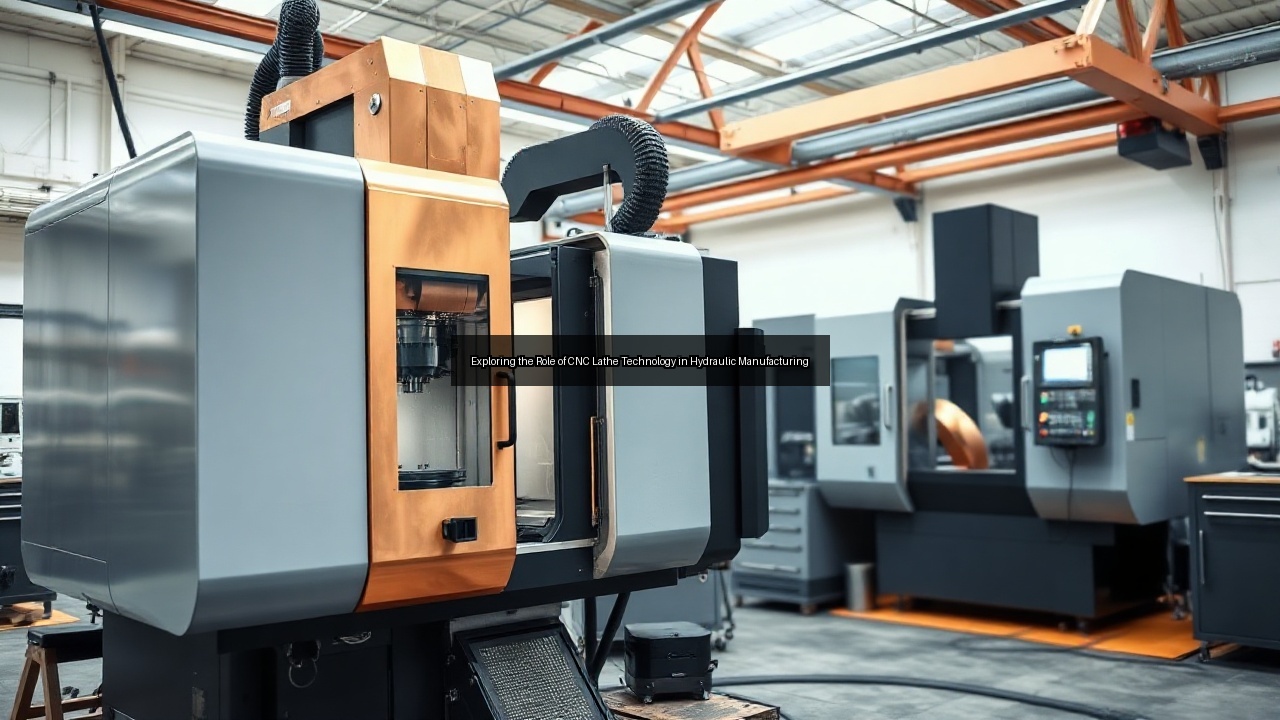
CNC lathe technology revolutionizes the manufacturing landscape, particularly in industries reliant on precision-engineered components. CNC, or Computer Numerical Control, automates the machining process, enhancing accuracy and efficiency. A CNC lathe operates by rotating the workpiece against cutting tools, allowing for the creation of complex shapes and features. This technology plays a vital role in producing hydraulic machined parts, which require exact dimensions and surface finishes to ensure optimal performance in hydraulic systems. The integration of CNC lathes has enabled manufacturers to streamline production processes, reduce labor costs, and minimize human error, all while maintaining high standards of quality assurance. As hydraulic applications demand increasingly intricate components, CNC lathes stand out as essential tools in meeting these challenges.
How CNC Lathe Works in Hydraulic Applications
CNC lathes function through a series of programmed commands that dictate tool movements and cutting speeds. This precision is crucial in hydraulic applications, where even minor deviations can lead to failures in performance. Components such as cylinders, pistons, and fittings often require stringent tolerances to function effectively in hydraulic systems. The CNC lathe's ability to produce these machined hydraulic parts consistently and accurately makes it indispensable. By utilizing various cutting tools, the CNC lathe shapes materials into the desired form, whether it’s a simple cylindrical part or a more complex design with multiple features. Additionally, the software controlling these machines can store specifications and replicate them across batches, ensuring uniformity and reliability in production.
Benefits of Using CNC Lathes for Machined Hydraulic Parts
Utilizing CNC lathes for manufacturing hydraulic machined parts offers numerous benefits. First and foremost, the precision achieved through CNC machining enhances the functionality and reliability of hydraulic systems. Hydraulic components must withstand high pressures and operate smoothly. A slight imperfection may lead to leaks or system failures, highlighting the importance of quality assurance in production. Furthermore, CNC lathes facilitate rapid prototyping, allowing manufacturers to test designs before full-scale production. This flexibility reduces time-to-market for new hydraulic products. Increased efficiency is another significant advantage; CNC lathes can operate continuously, maximizing output while minimizing labor costs. Manufacturers can produce complex parts with intricate geometries, opening avenues for innovation in hydraulic design.
The Importance of Precision in Hydraulic Systems
Quality Assurance in Hydraulic Machined Parts
Quality assurance plays a critical role in the production of hydraulic machined parts. In the realm of hydraulics, components must meet stringent quality standards to ensure safety and functionality. Any defect in a hydraulic part can lead to catastrophic failures, causing downtime and significant repair costs. Therefore, manufacturers often implement rigorous testing protocols to assess the integrity of each machined component. This includes dimensional inspections, pressure testing, and material analysis. CNC machining enhances quality assurance by enabling precise control over the manufacturing process. With the ability to monitor and adjust tool paths in real time, manufacturers can detect issues early and make necessary corrections. As a result, the final products not only meet but often exceed industry standards, instilling confidence in end-users.
Role of CNC Machining in Ensuring Precision
The role of CNC machining in ensuring precision cannot be overstated, especially in hydraulic systems. CNC lathes and mills allow for exact replication of designs, translating engineering specifications into reality with remarkable accuracy. This precision is vital for creating components that must fit snugly and function seamlessly within hydraulic assemblies. The automated nature of CNC machining reduces the likelihood of human error, which is a common concern in traditional machining methods. Moreover, CNC technology can accommodate complex geometries that traditional techniques might struggle with. As hydraulic systems evolve, the demand for more sophisticated and precise components increases, making CNC machining more relevant than ever. Manufacturers like Hogge Precision and McCormick Industries leverage these capabilities, ensuring their hydraulic parts meet the evolving needs of the industry.
Key Manufacturers: Hogge Precision and McCormick Industries
Hogge Precision and McCormick Industries stand as leading players in the hydraulic machined parts manufacturing sector. Both companies capitalize on CNC technology to produce high-quality components essential for hydraulic systems. Hogge Precision focuses on delivering custom solutions tailored to specific hydraulic applications, utilizing advanced CNC lathes to achieve intricate designs. Their commitment to quality assurance ensures that each part meets rigorous standards, providing reliability to customers. Similarly, McCormick Industries has built a reputation for excellence in hydraulic machining. They employ state-of-the-art CNC machinery and skilled technicians to ensure every piece is crafted to perfection. By embracing innovation and prioritizing precision, these manufacturers exemplify how CNC lathe technology enhances the quality and effectiveness of hydraulic systems.
Efficiency and Productivity in Hydraulic Parts Manufacturing
Impact of CNC Technology on Manufacturing Efficiency
CNC technology significantly impacts manufacturing efficiency, particularly in the production of hydraulic parts. The automation provided by CNC lathes reduces cycle times and increases output without sacrificing quality. Traditional machining processes often require multiple setups and manual adjustments, leading to longer production times and increased labor costs. CNC machines streamline this process by allowing for rapid changes in tooling and programming. A single setup can produce a batch of hydraulic machined parts with minimal intervention. This efficiency translates into cost savings for manufacturers, enabling them to offer competitive pricing while maintaining high-quality standards. Furthermore, the ability to run machines continuously maximizes productivity, making CNC technology a game-changer in the hydraulic manufacturing landscape.
Comparing CNC Lathe and Traditional Milling Techniques
Comparing CNC lathe technology to traditional milling techniques reveals distinct advantages for manufacturers of hydraulic machined parts. Traditional milling often relies on manual operation, which can lead to inconsistencies in quality and longer lead times. In contrast, CNC lathes offer precision and repeatability, ensuring that each part adheres to exact specifications. Additionally, CNC lathes can perform multiple operations in a single setup, reducing the need for tool changes and manual adjustments. This capability not only speeds up production but also decreases the likelihood of errors. As hydraulic systems require high-performance components, the choice between CNC lathes and traditional methods becomes clear. Manufacturers seeking to optimize their processes and deliver superior products increasingly turn to CNC technology.
FZE Manufacturing Solutions: A Case Study in Hydraulic Parts
FZE Manufacturing Solutions exemplifies the benefits of integrating CNC lathe technology in hydraulic parts manufacturing. This company specializes in producing custom hydraulic components, leveraging advanced CNC machinery to ensure precision and efficiency. Their approach includes rigorous quality assurance processes that monitor each stage of production, further enhancing the reliability of their products. FZE’s commitment to continuous improvement drives innovation, allowing them to meet the evolving demands of the hydraulic industry. By utilizing CNC technology, FZE has reduced lead times and increased production capacity, positioning itself as a leader in the market. Their success demonstrates how effective CNC machining can transform hydraulic parts manufacturing, providing a model for other manufacturers to follow.
See Also
- Innovative Materials in the Production of Hydraulic Machined Parts
- The Future of Hydraulic Systems Driven by Advanced Machining
- The Future of CNC Machining in Hydraulic Parts Production
- The Art and Science of Creating Reliable Hydraulic Machined Parts
- From Concept to Creation the Journey of Hydraulic Machined Parts Manufacturers