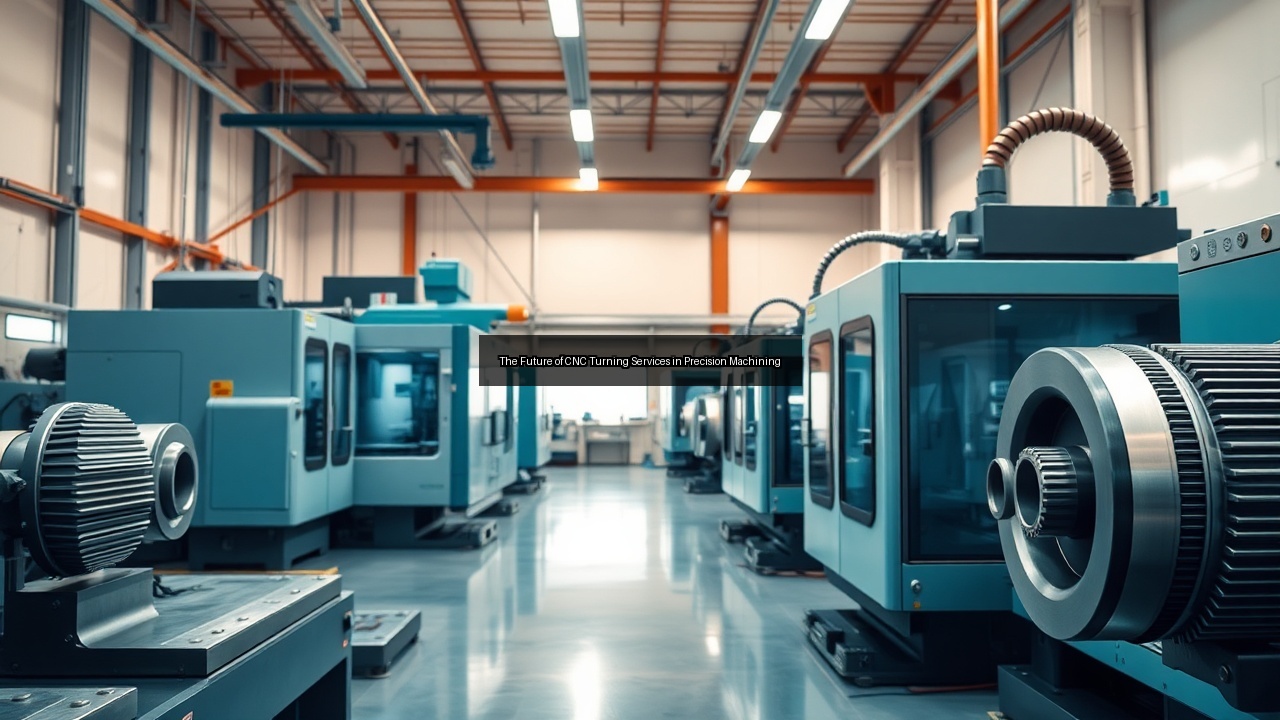
The Future of CNC Turning Services in Precision Machining
Understanding CNC Turning Services and Their Importance
Overview of CNC Turning
CNC turning services play a crucial role in precision machining, enabling manufacturers to produce complex and highly precise components. The process involves the use of computer numerical control (CNC) lathes, which rotate a workpiece against a cutting tool to achieve desired shapes and dimensions. This method excels in creating cylindrical parts, such as shafts, bushings, and fittings, with remarkable accuracy. CNC turning is particularly valued in industries requiring tight tolerances and high-quality finishes, such as aerospace, automotive, and medical device manufacturing. The ability to consistently replicate intricate designs makes CNC turning indispensable in today’s manufacturing landscape.
Key Features of Swiss Turning Services
Swiss turning services bring exceptional precision to the machining process, particularly for small, intricate parts. Swiss lathes, designed to handle long, slender workpieces, offer unique advantages such as reduced setup time, high-speed production, and superior accuracy. One of the standout features of Swiss turning is the capability for simultaneous machining operations. This allows multiple tools to work on a part at once, significantly increasing productivity. The integration of live tooling in Swiss turning also enables operations like drilling and milling, further enhancing versatility. Swiss turning services stand out in their ability to maintain tight tolerances, making them the preferred choice for manufacturers focused on quality and efficiency.
Comparison with CNC Milling and Routing
CNC turning, milling, and routing are three fundamental processes in precision machining, each with its unique strengths. While CNC turning focuses on rotating workpieces to shape them with fixed cutting tools, CNC milling utilizes rotating tools to cut and shape stationary workpieces. This distinction allows milling to produce complex geometries and flat surfaces. On the other hand, CNC routing is primarily used for cutting softer materials, often in larger sheets, making it ideal for industries like woodworking and plastics. Each method has its applications, but CNC turning services excel in producing cylindrical parts with high precision and repeatability, giving them an edge in sectors where quality and accuracy are paramount.
Technological Advancements in CNC Turning
Innovations in Swiss Lathe Technology
Recent advancements in Swiss lathe technology have transformed CNC turning services, enabling manufacturers to achieve higher levels of precision and efficiency. Newer models incorporate advanced features such as multi-axis capabilities, allowing for more complex machining operations in a single setup. These innovations reduce cycle times and enhance productivity. Additionally, modern Swiss lathes are equipped with enhanced control systems that improve user interfaces and programming capabilities, making them more intuitive for operators. The integration of high-speed spindles and precision tool holders also contributes to improved surface finishing and reduced tool wear, leading to better overall product quality. As technology continues to evolve, Swiss turning services will likely become even more sophisticated, pushing the boundaries of what is possible in precision machining.
Integration of 3D Printing in CNC Machining
The integration of 3D printing technology into CNC machining processes is reshaping the landscape of manufacturing. Combining traditional CNC turning with 3D printing allows for rapid prototyping and the creation of complex geometries that would be difficult or impossible to achieve through conventional methods alone. This hybrid approach leverages the strengths of both technologies; 3D printing excels in creating intricate designs and reducing material waste, while CNC turning offers high precision and excellent surface finishes. Companies can produce parts with complex internal structures that enhance performance and reduce weight, particularly in industries like aerospace and automotive. As the capabilities of 3D printing technology continue to expand, its synergy with CNC turning services will drive innovation and efficiency in precision machining.
The Role of Automation and Smart Machines
Automation and smart machines are revolutionizing CNC turning services, enhancing efficiency and precision while reducing human error. The use of automated loading and unloading systems allows for continuous production, minimizing downtime and maximizing output. Smart machines equipped with sensors and IoT connectivity can monitor performance in real-time, enabling predictive maintenance and reducing the risk of breakdowns. These advancements lead to more consistent quality and reduced costs. Furthermore, automation streamlines the workflow, allowing companies to respond quickly to changing demands or custom orders. As the manufacturing sector increasingly embraces automation, the future of CNC turning services will likely be characterized by enhanced productivity and smarter processes that elevate precision machining standards.
Materials and Applications in Precision Machining
Common Materials Used in Swiss Turning (Copper, Steel, PTFE, Acetal)
Swiss turning services accommodate a diverse range of materials, each chosen for specific applications based on their unique properties. Copper is celebrated for its excellent thermal and electrical conductivity, making it ideal for components in electronics and heat exchangers. Steel, known for its strength and durability, is widely used in automotive and aerospace applications where robustness is essential. PTFE (Polytetrafluoroethylene) offers outstanding chemical resistance and low friction, making it suitable for seals and gaskets in harsh environments. Acetal, a versatile thermoplastic, is employed in precision parts that require low friction and high wear resistance. The selection of materials in CNC turning services ensures that companies can meet the stringent requirements of various industries while maintaining high standards of quality.
Applications in Various Industries
CNC turning services find applications across a multitude of industries, often serving as the backbone of precision manufacturing. In the aerospace sector, components such as landing gear parts and engine mounts require the utmost precision and reliability, achievable through CNC turning. The automotive industry relies on Swiss turning for producing high-volume parts like transmission components and valve bodies, where consistency and quality are critical. The medical sector demands precision machining for surgical instruments and implants, where any deviation can have serious consequences. Other industries, including electronics and defense, also benefit from the precision and efficiency of CNC turning services. By catering to such a wide array of applications, CNC turning solidifies its place as a vital service in modern manufacturing.
Case Studies: Hogge Precision Parts and McCormick Industries
Examining real-world applications of CNC turning services highlights their impact on precision manufacturing. Hogge Precision Parts, a leader in the industry, utilizes Swiss turning to produce high-quality components for the aerospace sector. Their ability to maintain tight tolerances and deliver complex geometries has earned them a reputation for excellence among aerospace clients. McCormick Industries showcases the versatility of CNC turning by producing components for various sectors, including automotive and medical device manufacturing. Their investment in advanced Swiss lathes and quality assurance practices ensures that they meet the rigorous swiss machining services demands of their diverse customer base. These case studies exemplify how effective CNC turning services can enhance productivity and quality across different industries.
Quality Assurance and Precision in CNC Turning Services
Importance of Tolerances in Precision Machining
Tolerances play a crucial role in CNC turning services, fundamentally impacting the quality and functionality of machined parts. In precision machining, tolerances define the allowable variation in dimensions, ensuring that parts fit and function as intended. Tight tolerances are particularly essential in industries like aerospace and medical devices, where even minor deviations can lead to catastrophic failures. CNC turning services excel at maintaining these tolerances through advanced technology and skilled operators. By implementing rigorous measurement and inspection techniques, manufacturers can ensure that every component meets the specified requirements. The commitment to quality and precision in CNC turning services underpins their importance in high-stakes applications.
Quality Assurance Practices in CNC Turning
Quality assurance practices are integral to the success of CNC turning services, ensuring that every part produced meets stringent industry standards. Effective practices include regular calibration of CNC machines, frequent inspection of finished components, and adherence to established quality management systems. Companies often employ statistical process control (SPC) to monitor production processes and identify potential variations before they affect quality. Documentation of quality checks and compliance with industry regulations reinforces the reliability of CNC turning services. By fostering a culture of quality assurance, manufacturers can enhance customer satisfaction and minimize waste, ultimately leading to increased profitability.
ISO Standards in CNC Machining and Turning Services
ISO standards play a pivotal role in defining quality benchmarks for CNC machining and turning services. Adhering to ISO 9001, for instance, ensures that companies maintain consistent quality across their operations. Certification to these standards demonstrates a commitment to excellence and provides assurance to customers regarding the reliability of products. Additionally, ISO 2768 addresses general tolerances for linear dimensions, which is particularly relevant in CNC turning services. Compliance with these standards not only enhances the credibility of a company but also streamlines processes and improves overall efficiency. As industries continue to demand higher quality and precision, adherence to ISO standards will remain a cornerstone of successful CNC turning services.