The Role of Temperature Control in Successful Rubber Molding Processes
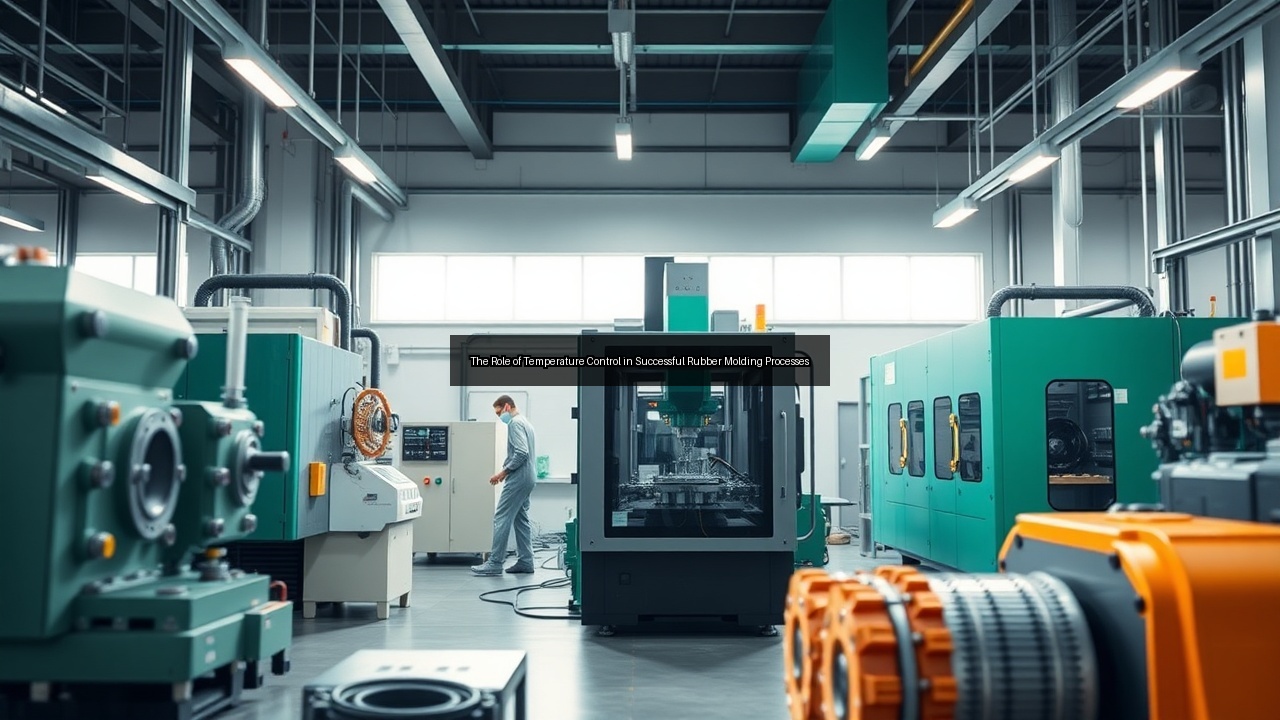
Understanding the Importance of Temperature Control in Rubber Molding
The Science of Temperature in Molding Processes
Temperature control stands as a cornerstone in the rubber molding process, directly influencing the quality and performance of the final product. Rubber, as an elastomer, undergoes significant changes in its properties depending on the temperature applied during molding. At elevated temperatures, the viscosity of rubber decreases, allowing it to flow more easily into the mold. Conversely, lower temperatures can result in higher viscosity, making it difficult for the material to fill the mold uniformly. Manufacturers must understand the polymerization and curing processes that occur at different temperatures to achieve optimal results.
Temperature also affects the chemical reactions involved in the curing of rubber. Each elastomer, such as EPDM or silicone, has specific temperature thresholds that ensure the correct cross-linking of molecules. Insufficient heat can lead to incomplete curing, compromising the durability and strength of the molded rubber. On the other hand, excessive heat can cause degradation, leading to poor performance. Thus, an expert grasp of thermal dynamics is essential for engineers and manufacturers involved in custom rubber molding.
How Temperature Affects Rubber Properties
The properties of rubber vary significantly with temperature fluctuations. For instance, as the temperature increases, rubber becomes more elastic, enhancing its flexibility and resilience. This characteristic is particularly important when designing parts such as bushings or gaskets, where flexibility plays a critical role in their function. Conversely, low temperatures can cause rubber to become stiff and brittle, which may lead to cracking or failure in applications requiring vibration dampening, like automotive bumpers.
Furthermore, temperature control affects the material's hardness, tensile strength, and elongation. Manufacturers must monitor these variables closely to ensure that the final product meets specific tolerances and quality standards. This precision is vital in industries like aerospace and automotive, where even minor deviations can lead to significant safety issues. Understanding how temperature influences these properties allows manufacturers to tailor their processes, ensuring that products not only meet but exceed customer expectations.
Impact of Temperature on Tolerances and Quality
In custom rubber molding, achieving tight tolerances is critical. Temperature fluctuations can lead to dimensional variations in the molded parts, affecting their fit and function. For example, if the temperature during the curing process is inconsistent, the rubber may expand custom molding or contract differently than anticipated. This can result in products that do not meet ISO standards or customer specifications.
Quality control begins with effective temperature management. Manufacturers can implement temperature monitoring systems to ensure consistent conditions throughout the molding cycle. By using advanced technologies such as infrared sensors and data logging, they can identify and rectify temperature-related issues before they impact production. Ultimately, maintaining controlled temperatures leads to higher quality rubber shapes and a reduction in waste, ensuring that manufacturers deliver reliable products to their customers.
Techniques for Effective Temperature Management in Custom Rubber Molding
Temperature Control in Injection Molding
Injection molding requires precise temperature control to ensure optimal flow and curing of rubber materials. The process involves injecting molten rubber into a mold cavity under high pressure. Maintaining the right temperature during this phase is crucial for achieving uniform dispersion and minimizing defects. Manufacturers often use heated molds to facilitate the injection process, allowing the rubber to flow smoothly and fill every corner of the mold.
Effective temperature management in injection molding also involves preheating the rubber compound before it enters the mold. This technique reduces viscosity, enabling better flow characteristics and enhancing the final product's surface finish. Additionally, cooling systems play a vital role in controlling the temperature of the mold after the injection process, ensuring that the rubber cures evenly and reaches the desired hardness. Implementing these controls helps manufacturers achieve higher production efficiency and superior quality in custom rubber molds.
Best Practices for Compression Molding
Compression molding, another common technique in rubber manufacturing, relies heavily on effective temperature management. This process involves placing a pre-measured amount of rubber into a heated mold, where it is subjected to heat and pressure. The temperature of both the rubber and the mold must be carefully controlled to ensure proper curing and to achieve the desired physical properties.
One best practice in compression molding is to preheat the mold to the recommended temperature before inserting the rubber. This step reduces the chances of temperature shock, which can lead to uneven curing. Manufacturers often utilize thermal blankets or resistive heating elements to maintain consistent mold temperatures. Furthermore, incorporating temperature monitoring devices can provide real-time data, allowing for quick adjustments and ensuring that the process remains within optimal parameters.
Innovative Approaches in Transfer Molding
Transfer molding offers unique advantages in temperature control compared to other molding techniques. In this method, rubber is preheated in a separate chamber before being transferred into the mold. This preheating phase allows for better control over the material's viscosity, leading to enhanced flow and reduced cycle times.
Innovative manufacturers are now adopting advanced technologies such as real-time monitoring systems that track temperature fluctuations during the transfer process. These systems can detect deviations and automatically adjust heating elements to maintain optimal conditions. Additionally, the use of advanced mold materials with superior thermal conductivity can improve heat distribution, resulting in more consistent curing across the entire molded part. Such innovations not only enhance the quality of custom rubber molding but also increase overall production efficiency.
Applications and Benefits of Precise Temperature Control
Temperature Control in Automotive and Aerospace Manufacturing
In the automotive and aerospace sectors, precise temperature control during rubber molding is non-negotiable. Components like gaskets, seals, and vibration dampeners must meet stringent safety and performance criteria. Any failure in these parts can lead to catastrophic results. Therefore, manufacturers invest heavily in advanced temperature management systems to ensure that each molded part adheres to strict tolerances and quality standards.
For example, in automotive manufacturing, rubber parts must withstand high levels of stress and temperature fluctuations. rubber custom molding Proper temperature control ensures that these parts maintain their integrity over time, enhancing the vehicle's overall performance and safety. Similarly, aerospace components require materials that can withstand extreme conditions. Here, the role of temperature control becomes even more critical, as it directly impacts the reliability and longevity of the components used in flight.
Role in Producing High-Quality Rubber Shapes
High-quality rubber shapes arise from meticulous attention to temperature throughout the molding custom molding process. Achieving consistent temperatures results in uniform curing, which directly correlates with improved physical properties such as tensile strength, elongation, and resistance to wear and tear. Custom rubber molds designed with precise temperature control in mind can cater to specific applications, ensuring that the final product meets or exceeds customer expectations.
Moreover, quality inspection processes benefit significantly from effective temperature management. When manufacturers maintain stable temperatures, they can more accurately assess the performance of molded parts against industry standards. This elevated level of quality assurance provides manufacturers with a competitive edge, as customers increasingly demand reliability in their rubber products.
Enhancing Performance of Custom Rubber Molds
Custom rubber molds benefit immensely from precise temperature control, leading to enhanced performance across various applications. Engineers can design molds that optimize heat distribution, ensuring even curing and reducing the likelihood of defects. This optimization allows for intricate designs and complex shapes that might not be achievable without careful temperature management.
Furthermore, effective temperature control minimizes the risk of defects like air entrapment or incomplete curing, which can compromise the performance of rubber components. Manufacturers can achieve higher production yields and reduced scrap rates by addressing these issues early on. The result is a more efficient manufacturing process that delivers high-quality custom rubber molding solutions tailored to specific customer needs.
Challenges and Solutions in Temperature Regulation for Rubber Manufacturing
Common Temperature-Related Issues in Molding
Temperature-related challenges pose significant obstacles in rubber manufacturing. Common issues include inconsistent curing, dimensional inaccuracies, and surface defects. Incomplete curing often arises from insufficient temperatures or uneven heat distribution, leading to compromised rubber properties. Dimensional inaccuracies can occur when temperature fluctuations cause the material to expand or contract unpredictably.
Surface defects, such as blisters or discoloration, often result from overheating or improper cooling. These issues can severely impact the final product's aesthetics and performance. Manufacturers must remain vigilant in monitoring and controlling temperatures throughout the molding process to mitigate these challenges effectively. This vigilance ensures that the final products meet customer expectations and comply with industry standards.
Technological Advances in Temperature Monitoring
Advancements in temperature monitoring technologies have revolutionized the rubber molding industry. Systems equipped with sensors and data logging capabilities provide real-time insights into the temperature of both the molds and the rubber materials. These technologies enable manufacturers to detect fluctuations immediately and adjust settings to maintain optimal conditions.
Furthermore, integrating artificial intelligence into temperature regulation systems allows for predictive modeling. By analyzing historical data, these systems can forecast potential temperature issues before they arise, enhancing the overall reliability of the molding process. Such innovations not only improve efficiency but also contribute to producing custom molding higher-quality rubber products with fewer defects.
Expert Tips for Achieving Optimal Results
Achieving optimal results in custom rubber molding involves applying expert tips focused on temperature management. First, manufacturers should conduct thorough testing to determine the ideal temperature ranges for specific rubber formulations. Regular calibration of temperature monitoring devices ensures accuracy and reliability during production.
Implementing a robust quality control program that includes regular inspection of molded parts can help identify temperature-related issues early in the process. Lastly, fostering a culture of continuous improvement encourages employees to share insights and experiences, leading to enhanced practices in temperature regulation. By following these expert tips, manufacturers can achieve high-quality results while maximizing efficiency in their rubber molding operations.